Table Of Content
Along with incredible soil fertility, keyhole gardens are notable for maximizing yields for a super productive vegetable patch. A keyhole garden is a circular raised bed with a pathway to its center. When viewed from above, this indentation makes it look like an antique keyhole. This wood log compost enclosure is inspired by the children’s toy set, Lincoln Logs.
This household plant cultivator doubles as a compost bin for users to fertilize their kitchen waste - Yanko Design
This household plant cultivator doubles as a compost bin for users to fertilize their kitchen waste.
Posted: Sun, 13 Feb 2022 08:00:00 GMT [source]
Trench Composting
Tip the bin backwards so it’s resting on its back boards. Using your staple gun, staple hardware cloth across the entire bottom of the bin. Be sure to put staples every 3″ or 4″ to make sure it’s held on well and no critters can burrow in between the staples. When you compost outdoors, you’re going to have to deal with the elements.
DIY Rotating Compost Barrel

6 - Cut the hardware cloth or chicken wire to the size of the sides of your bin and attach it to the posts with screws. You may need to twist the chicken wire to get it completely secure. A kitchen compost bin is basically used to store scraps until it's ready to be moved to an outdoor compost bin.
Easy Indoor Compost Bin
The Best Looking Indoor Composting Bins for Your Kitchen - Apartment Therapy
The Best Looking Indoor Composting Bins for Your Kitchen.
Posted: Mon, 12 Jun 2017 07:00:00 GMT [source]
A wooden frame holds a 55-gallon food-grade drum horizontally, which was acquired for about $13 from a local soda distributor. A hole saw was used to cut holes into barrel’s top and bottom to enable a PVC pipe to be threaded through horizontally, which acts as the barrel’s spinning axis. The exposed PVC pipe ends are screwed into the barrel’s wooden holder to prevent movement and to assist hand turning.
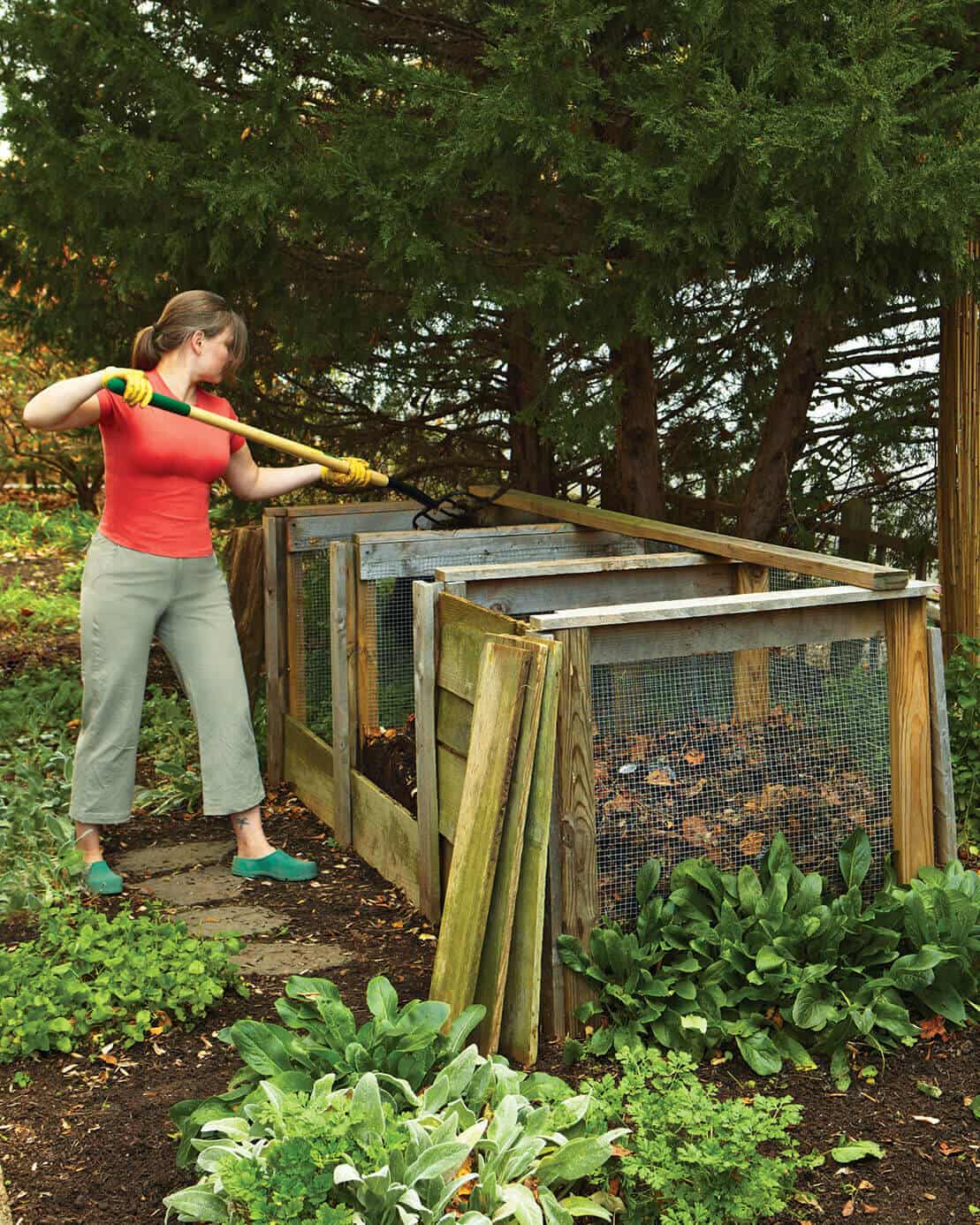
The wooden slats on the front of each bin are removable to make “turning” (moving the contents from one bin to the next) easier. This turning process aerates the pile, which speeds up composting. However, you’ll want to choose a design to meet your needs. Below are photos and drawings of our 3-bay compost design. The compost bin features three 4x4x4 bays, and takes up a total footprint of about 12×4 feet. Unlike plastic or metal, wood both absorbs and releases moisture.
When To Add Compost To The Garden (Now or Later?)
Look around your homestead environment, I'm sure you have what it needs to create this simple DIY willow composter. Made out of branch cuttings from bushes or trees, easily weave them together to create this wonderful bin. Learning this skill could make a huge difference around your garden.
Raised Garden Bed With Compost Bins
Smaller piles may struggle to achieve sufficiently high temperatures to kill bad organisms and weed seeds. Larger piles can achieve composting temperatures more easily, but need more frequent turning to ensure proper oxygen supply. A compost bin is like an all-you-can-eat buffet for tiny organisms like bacteria and fungi. They break down the organic materials, absorb what they can, and release good-for-plants nutrients like nitrogen, phosphorus, and magnesium. In addition to keeping unsuitable materials such as food scraps out of the compost bin, making sure it is always closed is key to keep pests out.
However, it is also costly and requires more physical effort and time if you DIY. Like a compost bin made of wood, a brick compost bin can be built to your size specifications if you have a local vendor cut or split the brick for you. If you are getting resistance at home about building a compost bin due to unfavorable appearances, a decorative brick bin might be appropriate for you. Bricks are stacked to the desired height, providing a clean, rich, and symmetrical structural appearance. An optional mesh frame can be attached to protect the top and front openings of your bin from critters. Definitely one of the more expensive-looking stationary compost bins out there.
During that time, the pile is turned five times to ensure that all materials are mixed into the center and have a chance to attain the higher temperatures found inside the pile. The outside of the pile will generally not attain these “pathogen reduction” temperatures. On a smaller pile, achieving 131 F for 15 days can be challenging. Compost thermometers of various sizes allow you to probe temperatures up to four feet deep and track the progress of your pile. Turning and watering a stalled pile can help it re-heat and decompose faster and more completely.
There is no better tool for making great compost than a well designed homemade compost bin. The organic materials will continue to slowly decompose into a balanced substrate that is safe to use as a soil amendment and fertilizer. The compost should have the moisture consistency of a squeezed out sponge, which is much more difficult to control in open air heaps. At the very least, placing a tarp over the pile will protect against the elements. Originating in Africa, keyhole gardens were designed for hot, arid climates. Stones or bricks make up the walls of the raised bed, helping to conserve moisture.
There are 3 key factors to a good homemade compost bin design. And together, they play a huge role in the success of a pile that heats up fast, and delivers great compost. To make, simply place straw bales into a square shape, leaving a 3’ x 3’ x 3’ opening in the center. Just like with a trash can, plastic totes can be transformed into a mini compost bin by drilling numerous holes along the bottom and sides. No matter which kind of composting device is right for you, you don’t have to spend a fortune buying a new compost bin. Compost tumblers consist of a rotating drum set on an elevated frame.
Wire mesh is put around the frame to ensure enough air is circulated to speed up the composting process. This wire mesh compost holder simply shows the versatility of wire mesh when it comes to composting. Use old bike wheels to form its frame, simply wrap the wire around. Your compost items can be easily loosened up and mixed this way.

You can also use staggered plastic bins which you stock with worms, feeding them throughout the entire compost process. Perforations in this case are on the lids of the containers, and the entire system is closed and above ground. Ideally, you should be able to bring the bins indoors when temperatures get too high or low for your worms. The way it works is that food scraps are always added to the bin on the left. Next to the Add-to-Pile bin I keep a round wire bin (our old wire bin!) filled with leaves. When adding food scraps, I cover them with handfuls of leaves.
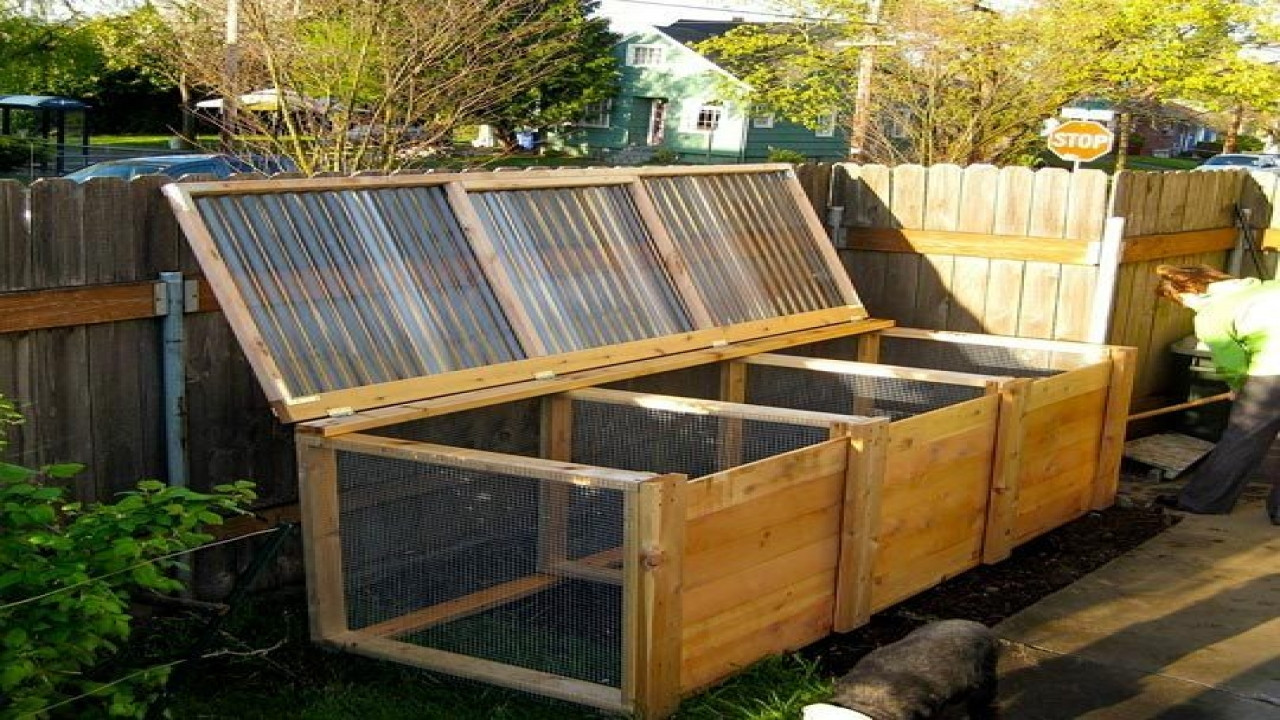
So a few years back, we set about creating what we hoped would be both a functional and attractive set of composting bins. Place a bin with bottom pieces on soil and slide four removable planks into each bin to evenly space front supports. Our piece of polycarbonate was not actually 3′ wide, so we had to layer two pieces next to each other. We overlaid two pieces so that the corrugations fit nicely together, and used clear silicone sealant to hold the pieces together.
We collected kitchen scraps in a compost pail, and my brothers and I took turns emptying it onto a giant compost pile in the corner of the yard. This heap is also where we put grass clippings and other yard waste. If you find a plastic bread or milk crate in the parking lot of an abandoned supermarket, they can be turned into compost bins that allow plenty of air to enter. If a single milk crate is too small, connect several together with wire, plastic twist-ties, or string to create a multiple chamber compost bin. Line the crate with cloth, mesh, or landscape fabric to contain the compost.
It also keeps both unwanted critters and odors out thanks to the covered top. Compost adds rich nutrients and promotes soil microbes that aid plant growth. Compost is essential for any vegetable garden, but it is expensive to buy. Not only can the costs add up, but if you buy compost from a store you have no control over what materials it’s comprised of. This is why many gardeners choose to make their own compost! If that’s you, check out these 16 compost bin designs you can use to get started.